
What Is the Best and Most Effective Therapy for Bipolar Disorder?
Updated: May 14

Living with bipolar disorder can feel difficult and confusing at times. Many people go through strong mood changes that affect their sleep, energy, emotions, work and relationships. Some days may feel very heavy, while other days may feel overly intense or restless.
Because bipolar disorder can affect people in different ways, treatment also looks different for everyone. What helps one person may not fully help another.
In many cases, the best bipolar disorder treatment includes therapy, medication support, healthy routines, and emotional care. The goal is not perfection. The goal is helping people feel more stable and supported in daily life.
In this blog, we will look at different therapy options and how they may help people living with bipolar disorder.
Table of Contents
Understanding bipolar disorder
Can therapy help bipolar disorder?
What therapy is often used for bipolar disorder?
Cognitive Behavioral Therapy for bipolar disorder
Dialectical Behavior Therapy for bipolar disorder
Interpersonal and social rhythm therapy
Family focused therapy for bipolar disorder
Psychoeducation for bipolar disorder
Group therapy and counseling
Online therapy for bipolar disorder
Long term support and management
Conclusion
Quick Summary
There is no single therapy that works best for every person. Bipolar disorder is a complex condition, so treatment usually needs to be personalized.
Many mental health professionals use a mix of therapies and support methods.
Therapy | How It May Help |
Cognitive Behavioral Therapy for bipolar disorder | Helps manage thoughts, emotions, and habits |
Dialectical Behavior Therapy for bipolar disorder | Helps with emotional control and coping skills |
interpersonal and social rhythm therapy (IPSRT) | Focuses on sleep and daily routine stability |
Family focused therapy for bipolar disorder | Improves communication and support at home |
Psychoeducation for bipolar disorder | Helps people understand symptoms and triggers |
Group therapy for bipolar disorder | Creates support through shared experiences |
Counseling for bipolar disorder | Offers one on one emotional support |
Many people also benefit from medication and regular mental health care.
Understanding bipolar disorder

Bipolar disorder is a mental health condition that causes major mood changes. These mood changes are much stronger than normal emotional ups and downs.
Some people experience depressive episodes where they feel very low, tired, hopeless, or emotionally disconnected. Others may go through manic or hypomanic episodes where they feel extremely energetic, restless, impulsive, or unable to sleep.
There are different types of bipolar disorder, including Bipolar I and Bipolar II. Symptoms can look different from person to person.
Bipolar disorder is not simply about being emotional. It can affect many parts of daily life, including relationships, focus, sleep, work, and emotional balance.
Can Therapy Help Bipolar Disorder?
Yes, therapy can help many people living with bipolar disorder.
Medication may help control mood symptoms, but therapy helps people understand their emotions, routines, stress triggers, and coping habits.
Therapy may help people:
Understand mood patterns
Handle stress in healthier ways
Improve daily routines
Build coping skills
Manage emotional reactions
Improve communication with others
For many people, therapy becomes an important part of long term emotional support.
What Therapy Is Often Used for Bipolar Disorder?
There is no single answer because every person’s experience is different.
Mental health professionals often use different therapy approaches depending on the person’s symptoms, emotional needs, and lifestyle.
In many cases, the most effective bipolar disorder therapy includes a mix of treatment methods instead of just one.
The goal is not to completely remove emotions or personality traits. The goal is helping people better manage symptoms and daily life.
Cognitive Behavioral Therapy for Bipolar Disorder

Cognitive Behavioral Therapy for bipolar disorder is one of the most common therapies used for bipolar disorder.
This therapy focuses on thoughts, emotions, and behaviors. It helps people notice unhealthy thinking patterns and replace them with healthier coping methods.
CBT may help people:
Recognize emotional triggers
Manage stress better
Build healthier habits
Improve routines
Handle negative thinking patterns
This therapy can be especially helpful during depressive periods when people struggle with low motivation or hopeless thoughts.
Many people like CBT because it gives practical tools that can be used in everyday life.
Dialectical Behavior Therapy for Bipolar Disorder
Dialectical Behavior Therapy for bipolar disorder focuses on emotional control and coping skills.
DBT teaches people how to slow down emotional reactions and handle difficult feelings in healthier ways. It also includes mindfulness techniques that help people stay more aware of their emotions.
DBT may help with:
Emotional overwhelm
Impulsive behavior
Relationship stress
Intense mood changes
Difficulty handling stress
Many people find DBT helpful because the skills feel practical and realistic for daily life.
Interpersonal and Social Rhythm Therapy
Interpersonal and social rhythm therapy (IPSRT) is a therapy created specifically for bipolar disorder.
This therapy focuses heavily on routines, sleep habits, and daily structure. That is because changes in sleep and routine can sometimes affect mood symptoms.
IPSRT may help people improve:

Even small routine changes can affect emotional wellbeing more than people realize.
Family Focused Therapy for Bipolar Disorder
Family focused therapy for bipolar disorder includes family members and loved ones in the treatment process.
Bipolar disorder can sometimes create misunderstandings, emotional tension, or communication problems at home. Family therapy helps people learn how to support each other in healthier ways
This therapy may focus on:
Better communication
Understanding bipolar disorder together
Recognizing warning signs
Reducing conflict at home
Building stronger support systems
Support from family members can make treatment feel less overwhelming for many people.
Psychoeducation for Bipolar Disorder
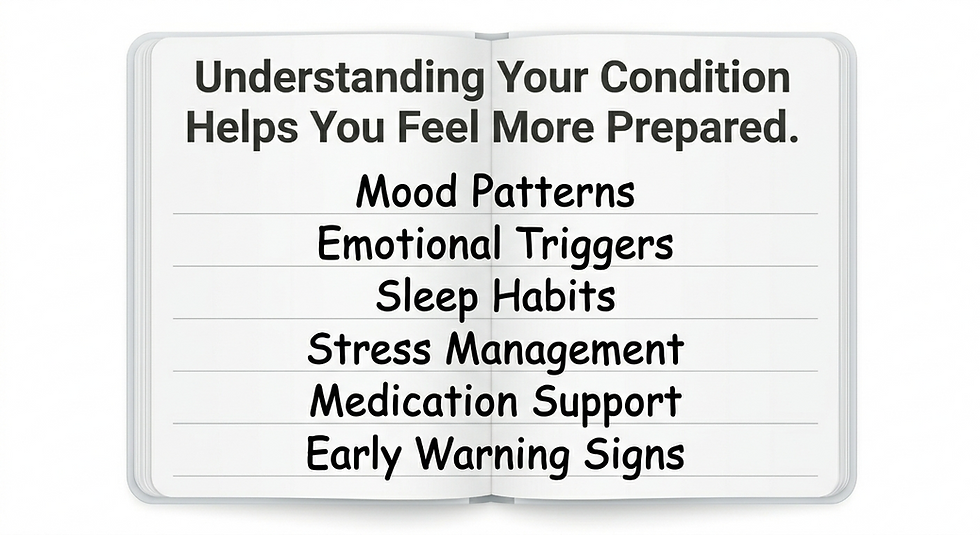
Psychoeducation for bipolar disorder means learning more about the condition and how it affects daily life.
This may include learning about:
Mood patterns
Emotional triggers
Stress management
Sleep habits
Medication support
Early warning signs
Education can help people feel more prepared and more aware of what they are experiencing.
Sometimes understanding the condition better can reduce fear and confusion.
Group Therapy and Counseling
Group therapy for bipolar disorder gives people a chance to talk with others who may understand similar experiences.
For some people, group therapy helps reduce feelings of isolation. It can also help people learn coping ideas from others.
Group sessions may talk about:
Stress management
Emotional support
Coping skills
Communication challenges
At the same time, counseling for bipolar disorder offers more personal one on one support. Individual counseling may help people talk about relationships, work stress, emotional struggles, or major life changes in a private setting.
Some people prefer group support while others feel more comfortable with individual therapy. Both can be helpful.
Online Therapy for Bipolar Disorder
Today, many people choose online therapy for bipolar disorder because it is flexible and easier to fit into daily life.
Online therapy may help people who:
Have busy schedules
Prefer staying at home
Live far from clinics
Feel more comfortable in familiar spaces
Virtual therapy can still provide emotional support, coping tools, and professional guidance.
However, severe symptoms may sometimes require in person care or additional medical support.
Long Term Support and Management
Managing bipolar disorder usually takes ongoing care and support over time.
Many people benefit from:
Regular therapy sessions
Healthy sleep routines
Stress management
Emotional support systems
Following treatment plans
Tracking mood changes
Progress does not always happen in a straight line. Some periods may feel easier than others. What matters is continuing to learn what support works best for you.
Conclusion
There is no single therapy that works best for every person living with bipolar disorder. The most effective treatment usually depends on the person’s symptoms, lifestyle, emotional needs, and support system.
For many people, a combination of bipolar disorder therapy, medication support, healthy routines, and emotional care can help improve daily life and emotional stability.
At MorMindful, individuals living with bipolar disorder can receive compassionate and personalized mental health support. The team focuses on helping people better understand their symptoms, build healthy coping skills, and create treatment plans that feel supportive and realistic for everyday life.
Frequently Asked Questions
1. What is the most effective bipolar disorder treatment?
The most effective treatment often includes a combination of therapy, medication management, healthy routines, and ongoing emotional support. Treatment plans are usually personalized because symptoms can vary from person to person.
2. Can therapy alone help bipolar disorder?
Therapy can be very helpful, but many people also benefit from medication and lifestyle support. Therapy often works best as part of a long term care plan designed around individual needs.
3. How does bipolar disorder therapy help with mood changes?
Therapy helps people understand emotional patterns, recognize triggers, improve coping skills, and manage stress more effectively. It can also support better communication and healthier daily habits.
4. Is bipolar disorder a lifelong condition?
Bipolar disorder is generally considered a long term mental health condition. However, many people learn how to manage symptoms successfully with proper treatment and support.
5. Is online therapy for bipolar disorder effective?
Online therapy can be helpful for many people, especially those who want flexible and convenient access to mental health support. Virtual sessions may still provide guidance, coping strategies, and emotional support from licensed professionals.
6. Can online therapy replace in person treatment?
In some situations, online therapy may work well on its own. However, severe symptoms or mental health emergencies may require in person care or additional medical support.
7. What is Cognitive Behavioral Therapy for bipolar disorder?
Cognitive Behavioral Therapy, also called CBT, helps people identify unhealthy thought patterns and replace them with healthier coping strategies. It may support stress management, emotional awareness, and daily stability.
8. How long does CBT take to show results?
The timeline can vary depending on the person and their treatment goals. Some people notice improvements within a few weeks, while others may benefit from longer term therapy support.
9. Can family focused therapy for bipolar disorder improve relationships?
Yes. Family focused therapy may help improve communication, reduce conflict, and teach loved ones how to better support someone living with bipolar disorder.
10. Why is routine important for bipolar disorder management?
Stable sleep patterns and consistent daily routines may help reduce emotional stress and mood disruptions. Many therapy approaches focus on building structure because routine can strongly affect emotional wellbeing.


