
5 Differences Between a Panic Attack and an Anxiety Attack (And What to Do)
- Jul 14
- 10 min read
Updated: Aug 18

Quick Summary
Panic attacks and anxiety attacks share many symptoms racing heart, chest tightness, dizziness which is why they're so often confused with each other.
The biggest difference is speed: panic attacks hit suddenly and peak within minutes, while anxiety usually builds gradually as stress continues over time.
According to the NIMH, an estimated 4.7% of U.S. adults will experience panic disorder at some point in their life, though isolated panic attacks are even more common.
Anxiety is often tied to an identifiable trigger (work, finances, health), while panic attacks can happen with no obvious warning at all.
Panic attacks tend to leave you physically exhausted afterward, while anxiety often leaves you mentally and emotionally drained instead.
Simple grounding techniques slow breathing, naming things you can see and hear can help in the moment, whether it's panic or anxiety.
If either experience happens often or starts affecting daily life, panic attack treatment and anxiety therapy can help you understand and manage both.
Both experiences are real, both are treatable, and neither means you're "overreacting" your nervous system is simply responding to a perceived threat.
Your heart starts racing. Your chest feels tight. Your mind jumps from one worrying thought to another. In moments like these, many people ask themselves one question:
"Am I having a panic attack or an anxiety attack?"
The truth is that these two experiences can feel very similar. They share many of the same physical and emotional symptoms, which is why they are often confused. While the term "anxiety attack" is commonly used, mental health professionals usually describe it as a period of intense anxiety rather than a separate medical diagnosis. That does not make the experience any less real.
Understanding the differences can help you feel less frightened, know what is happening in your body, and decide when it may be time to seek professional support. In this guide, we will look at five key differences between panic attacks and anxiety attacks, what they have in common, and what you can do if either one happens.
Panic Attack or Anxiety Attack? Here's the Quick Answer
Panic attacks and anxiety attacks can cause similar symptoms, including a racing heart, chest discomfort, sweating, dizziness, and feeling overwhelmed. The biggest difference is that panic attacks usually begin suddenly and become very intense within minutes, while anxiety often builds gradually as stress or worry continues over time. Both experiences are real, both can affect daily life, and both can be treated with the right support.
Quick Takeaways
Panic attacks usually happen suddenly.
Anxiety often builds over time.
Both can cause physical and emotional symptoms.
Neither experience should be ignored if it happens often.
Therapy can help you understand and manage both.
Table of Contents
Why panic attacks and anxiety attacks feel so similar
A quick comparison before we begin
Difference 1: How quickly they begin
Difference 2: What usually causes them
Difference 3: How your body reacts
Difference 4: How long they usually last
Difference 5: How you may feel afterward
What both experiences have in common
What should you do if it happens?
When should you ask for professional help?
Conclusion
Why Do Panic Attacks and Anxiety Feel So Similar?
One of the biggest reasons people confuse panic attacks and anxiety is because they can make your body react in almost the same way.
When your brain believes you are facing danger, it switches on your natural fight or flight response. Your body prepares to protect you, even if there is no real physical threat.
That is why both experiences may cause:
A racing heartbeat
Fast breathing
Sweating
Shaking
Chest discomfort
Feeling dizzy
Nausea
A sense that something is wrong
These symptoms are real. They are not "just in your head."
The difference is not whether the symptoms are real. The difference is usually how they begin, how they develop, and how long they last.
Did You Know? According to the National Institute of Mental Health (NIMH), an estimated 4.7% of U.S. adults will experience panic disorder at some point in their life and isolated panic attacks (without a diagnosed disorder) are even more common.
Source (verified): NIMH – Panic Disorder Statistics
Before We Look Closer, Here's a Simple Comparison
If you only have a minute, this table gives a quick overview of the main differences.
Panic Attack | Anxiety Attack |
Usually begins suddenly | Usually builds gradually |
May happen without warning | Often linked to ongoing stress or worry |
Symptoms become intense very quickly | Symptoms increase little by little |
Usually settles within a shorter period | May continue as long as the stress remains |
Can leave you physically exhausted | Often leaves you mentally and emotionally drained |
Everyone's experience is different, but this comparison can help you understand why the two are often mistaken for each other.
Difference 1: One Can Feel Like It Comes Out of Nowhere

This is often the biggest difference people notice.
A panic attack can begin very suddenly.
You might be shopping, watching television, driving, or even relaxing at home when intense fear seems to appear without warning.
Many people describe it as feeling like someone suddenly flipped a switch.
Anxiety usually works differently.
It often starts with a worry or stressful situation that slowly grows throughout the day. You might spend hours thinking about work, money, relationships, or your health before your anxiety becomes overwhelming.
A Simple Example
Imagine you have an important presentation tomorrow.
If you spend the entire day worrying about it, feeling tense, and finding it harder to relax, that is more like anxiety building over time.
A panic attack, on the other hand, might happen suddenly while you are sitting quietly, even if nothing around you seems dangerous.
That sudden intensity is one reason panic attacks can feel so frightening.
Difference 2: The Trigger Is Not Always the Same

Anxiety is often connected to something that is happening in your life.
Common triggers include:
Work pressure
Family problems
Financial worries
Health concerns
School or university
Major life changes
Sometimes the cause is easy to recognize.
Other times, several smaller stresses build up until your mind and body begin feeling overwhelmed.
Panic attacks can also have triggers, but not always.
Some people notice panic attacks during stressful situations.
Others experience them with no obvious warning at all.
This uncertainty can make people worry about when the next panic attack might happen.
Over time, some people even begin avoiding places or situations because they fear another attack.
Difference 3: Both Affect the Body, But Panic Often Feels More Intense

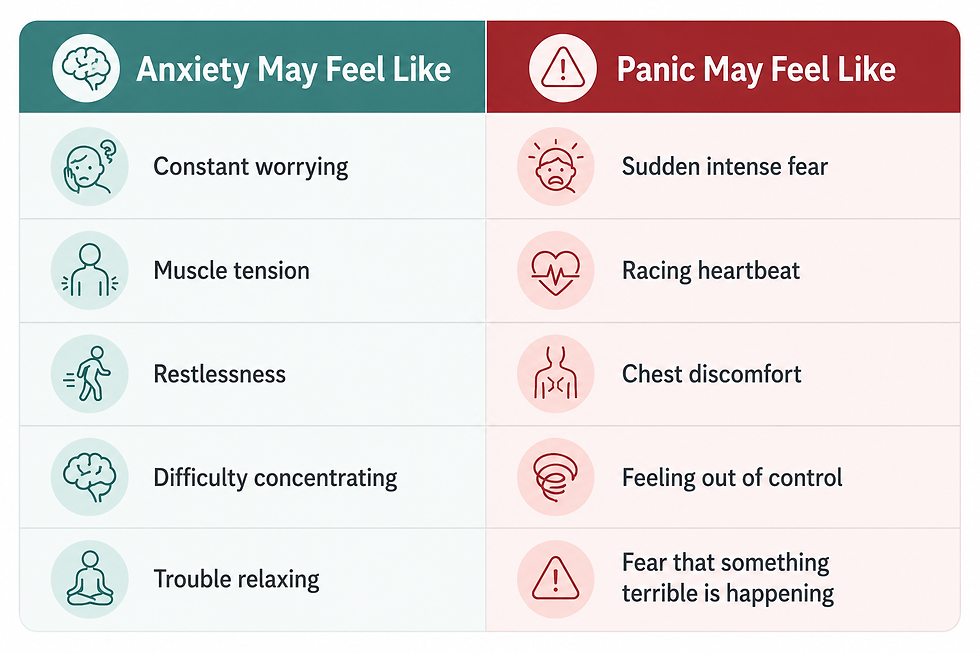
Both anxiety and panic can cause physical symptoms.
That is why many people initially believe they are having a serious medical problem.
However, panic attacks often create a stronger sense of immediate danger.
Someone having a panic attack may feel like they cannot breathe, believe they are losing control, or worry they are having a heart attack.
Anxiety usually develops more gradually. The body stays tense, the mind keeps worrying, and the physical symptoms often continue as long as the stressful thoughts remain.
The experiences can overlap, but the intensity often feels different.
If you have ever experienced either one, you know these feelings can be incredibly convincing.
That is why it is important to remember that you are not "overreacting." Your nervous system is responding to what it believes is a threat, even if the threat is not physical.
Difference 4: They Usually Follow Different Timelines
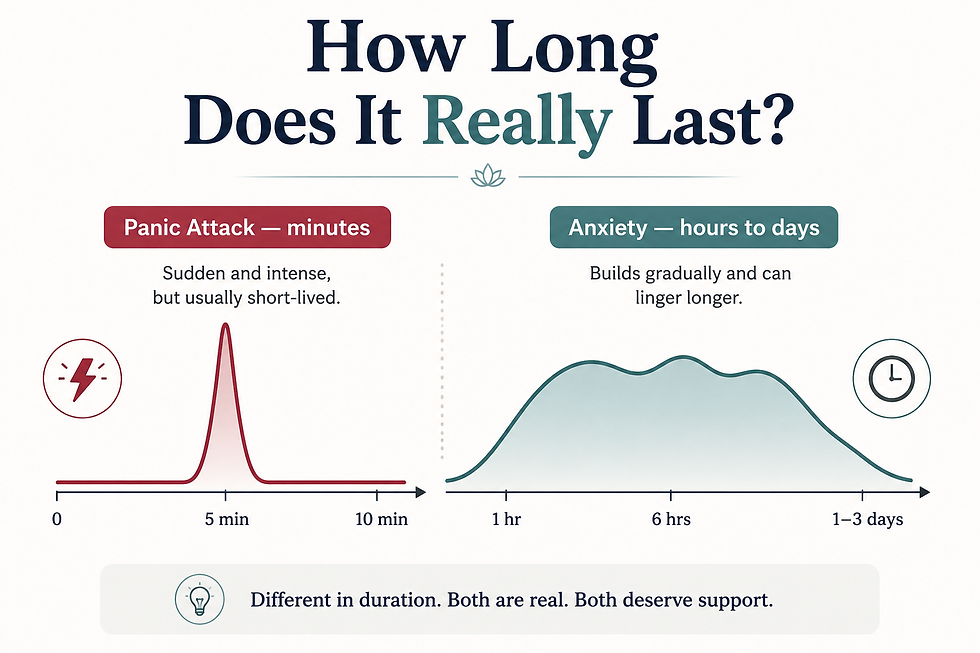
Another difference between panic attacks and anxiety is how long they usually last.
A panic attack often reaches its most intense point very quickly. Even though it can feel like it will never end, the strongest symptoms usually begin to ease after a short period of time.
Anxiety is often different.
Instead of appearing suddenly and disappearing quickly, anxiety can stay with you for hours or even days if the source of stress continues.
For example, if you are worried about a family issue or an upcoming exam, you may notice that the anxious feelings come and go throughout the day. Some moments may feel easier, while others feel more overwhelming.
A Quick Comparison
Panic Attack | Anxiety |
Symptoms become intense very quickly | Symptoms usually build gradually |
Often settles within a shorter period | May continue while the source of stress remains |
Can feel sudden and unexpected | Often develops alongside ongoing worry |
Every person is different, so these experiences may not always follow the same pattern. The important thing is to pay attention to how often they happen and how they affect your daily life.
Difference 5: How You Feel Afterward Can Be Different Too

Many people think about what happens during a panic attack or anxiety, but few talk about what happens afterward.
After a panic attack, it is common to feel completely drained.
Your body has just gone through an intense stress response, so you may feel:
Tired
Emotionally exhausted
Shaky
Relieved that it is over
Worried another attack might happen
After anxiety, the feeling is often different.
Instead of sudden exhaustion, you may notice ongoing mental fatigue. It can feel like your mind has been working overtime all day.
You might struggle to concentrate, feel irritable, or find it difficult to relax, even after the stressful situation has passed.
Neither experience is easy.
Both deserve understanding and support.
What Both Experiences Have in Common
Although panic attacks and anxiety are different, they also share many similarities.
Both can make everyday life feel more difficult.
Both can affect work, school, relationships, and confidence.
Both can make you avoid situations that once felt normal.
Most importantly, both can improve with the right support.
If these experiences happen often or begin affecting your quality of life, you do not have to simply live with them.
Treatment can help you better understand what you are experiencing while giving you practical tools to manage it.
What Should You Do if It Happens?
When panic or anxiety takes over, it can feel difficult to think clearly.
You do not have to remember dozens of techniques.
Start with a few simple steps.
Step 1: Pause and Focus on Your Breathing
Slow, steady breathing can help calm your nervous system.
Take a slow breath in through your nose, then gently breathe out through your mouth.
There is no need to rush.
Step 2: Remind Yourself What Is Happening
If you know you are experiencing anxiety or a panic attack, gently remind yourself:
"This feeling is uncomfortable, but it will pass."
Sometimes simply understanding what is happening can reduce fear.
Step 3: Notice Your Surroundings
Look around the room.
Notice:
Five things you can see
Four things you can touch
Three things you can hear
Two things you can smell
One thing you can taste
This grounding exercise can help bring your attention back to the present moment.
Step 4: Think About What May Have Triggered It
Later, when you feel calmer, think about what was happening beforehand.
Was there ongoing stress?
Were you feeling overwhelmed?
Did something unexpected happen?
Understanding possible triggers can be helpful when working with a therapist.
Step 5: Reach Out if It Keeps Happening
If panic attacks or anxiety become frequent, begin affecting your daily life, or make you avoid certain places or activities, it may be time to speak with a mental health professional.
You do not have to wait until things become unbearable before asking for help.
When Is It Time to Talk to a Mental Health Professional?
Everyone feels anxious from time to time.
However, professional support may be helpful if:
Panic attacks happen repeatedly.
Anxiety feels difficult to control.
You avoid places or situations because of fear.
Your sleep is being affected.
Your relationships are suffering.
Work or school has become harder to manage.
You no longer enjoy activities you once liked.
Seeking help is not about whether your symptoms are "bad enough."
It is about getting support before they begin taking over your life.
Conclusion
Panic attacks and anxiety attacks can feel frightening, especially when you are not sure what is happening.
While they share many of the same symptoms, understanding their differences can help you respond with greater confidence and know when it may be time to seek support.
Remember that you do not have to figure everything out on your own. Learning more about your symptoms is an important first step, and reaching out for professional help is another positive step toward feeling better.
Frequently Asked Questions
1. What is the main difference between a panic attack and an anxiety attack?
The main difference is that a panic attack usually begins suddenly and reaches its most intense point within minutes, while an anxiety attack typically builds gradually in response to ongoing stress or worry. Although they share many symptoms, they often develop in different ways.
2. Can a panic attack and an anxiety attack feel the same?
Yes. Both experiences can cause a racing heart, chest discomfort, sweating, dizziness, and shortness of breath. Because the symptoms are so similar, many people find it difficult to tell the difference without learning how each one usually develops.
3. Can anxiety turn into a panic attack?
Yes, it can. Some people experience anxiety that gradually becomes so intense that it leads to a panic attack. However, panic attacks can also happen without an obvious trigger, which is one reason they often feel so frightening.
4. How long does a panic attack usually last?
A panic attack often reaches its peak within a few minutes, although the overall experience can leave you feeling tired or emotionally drained afterward. The exact duration can vary from person to person.
5. What should I do if I think I am having a panic attack?
If you think you are having a panic attack, try to slow your breathing, remind yourself that the feelings will pass, and use grounding techniques to focus on your surroundings. If panic attacks happen repeatedly or interfere with daily life, consider speaking with a mental health professional.
6. Can anxiety last longer than a panic attack?
Yes. Anxiety often develops gradually and may continue for hours or even days if the source of stress remains. Panic attacks are usually shorter but much more intense during their peak.
7. When should I seek professional help for anxiety or panic attacks?
It is a good idea to seek support if anxiety or panic attacks become frequent, begin affecting your work, relationships, sleep, or daily routine, or cause you to avoid places or situations because of fear.
8. Can therapy help with both panic attacks and anxiety?
Yes. Therapy can help you understand your symptoms, identify possible triggers, and learn practical coping skills. Many people find that evidence based therapies such as Cognitive Behavioral Therapy and mindfulness based approaches help reduce both anxiety and panic symptoms over time.
9. Can you have a panic attack without having an anxiety disorder?
Yes. A person can experience a panic attack without having an anxiety disorder. However, if panic attacks become frequent or you begin worrying about having another one, it is important to speak with a mental health professional for an evaluation.
10. How can MorMindful help with panic attacks and anxiety?
MorMindful provides personalized mental health care for people experiencing anxiety and panic attacks. Depending on your individual needs, treatment may include therapy, Cognitive Behavioral Therapy, Dialectical Behavior Therapy, mindfulness based approaches, and psychiatry services when appropriate, helping you build healthy coping skills and regain confidence in everyday life.


